Why US Passive Income Advice Fails in the Philippines
Hook
You've watched the YouTube tutorial three times. The US creator made $3,000 last month with "just two hours of setup." You followed every step—opened the recommended platform, clicked through to the payment dashboard, selected your country from the dropdown.
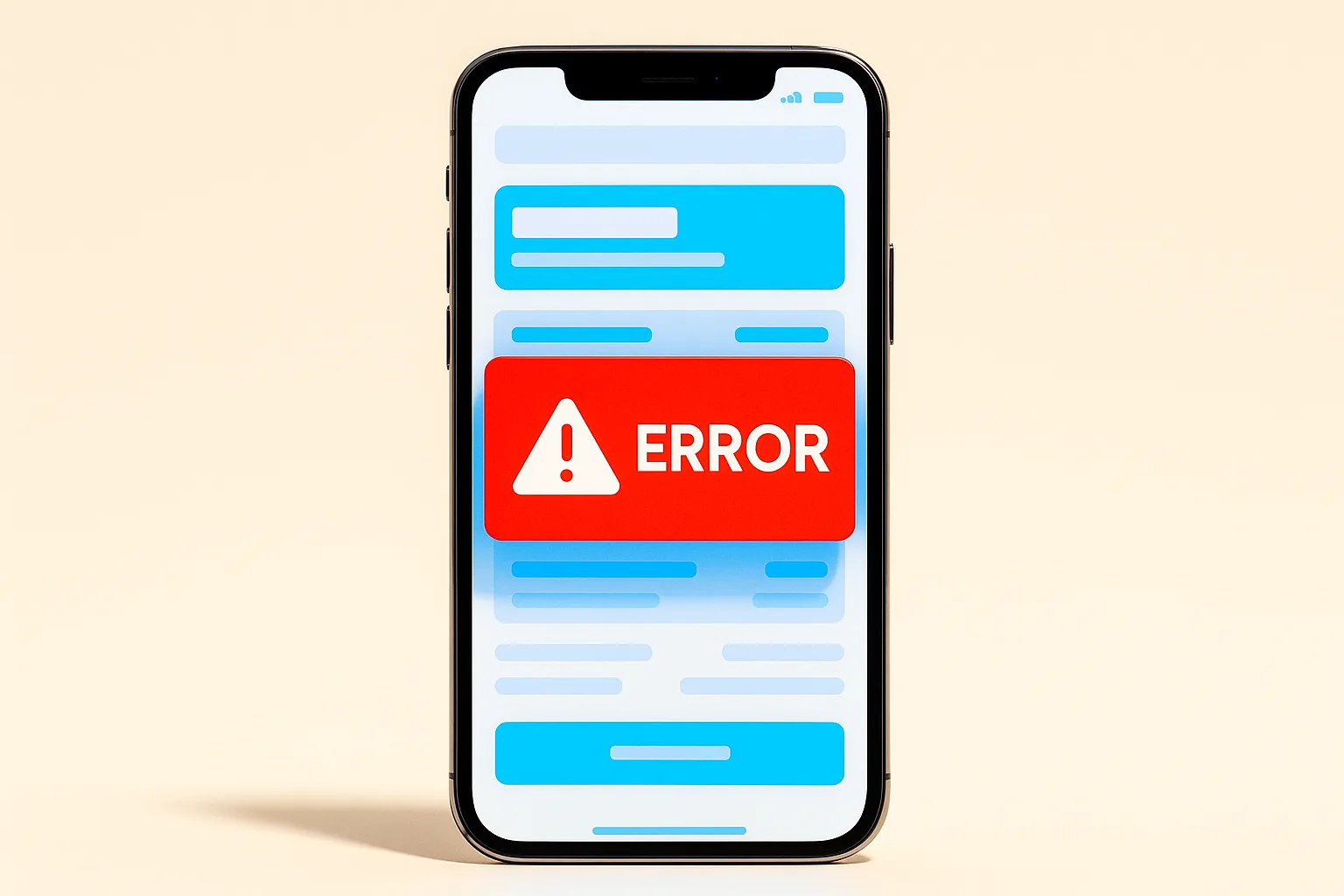
Error: Service not available in your region.
This isn't about motivation or hustle. The $500 passive income course that worked for a US creator assumes you have access to US financial infrastructure: a US bank account, a Social Security Number, platforms that don't geo-restrict, payment processors that offer full features in your country. When those strategies prescribe "$1,000 to start," they're calculating in an economy where that represents roughly 8% of median monthly household income—not 35%.
The advice isn't wrong. It's just not designed for your infrastructure. And the difference between "passive income strategy" and "platform access barrier" is costing Filipino creators real money and months of wasted effort. Before you buy another course or follow another blueprint, you need to understand exactly which structural barriers you're up against—and which strategies can actually be adapted for the Philippine context.
TL;DR
Five structural barriers block most US passive income advice from working in the Philippines. Platform access: many US services are geo-restricted or require US bank accounts you can't open from Manila. Capital disparities: the $1,000 USD minimum that American YouTubers call "beginner-friendly" represents weeks or months of Filipino income—changing risk tolerance entirely. Tax and regulatory gaps: BIR registration requirements, DTI permits, and remittance regulations differ sharply from US assumptions, yet most advice skips this entirely. Payment processing limits: PayPal Philippines operates with different features than PayPal US, and certain
Stripe use cases remain unavailable, creating friction at the cash-out stage. Market dynamics: Philippine audience traffic typically generates lower CPM rates, and locally-focused businesses face a smaller addressable market than US equivalents. The strategies aren't wrong—they're designed for different infrastructure. Adaptation requires stripping US assumptions and rebuilding the model around Philippine realities.
The Fundamentals
When US-based passive income advisors talk about "building wealth while you sleep," they're not just selling a dream—they're describing a system built on invisible infrastructure. The advice fails for Filipinos not because the strategies are bad, but because the advisors skip over the foundational layer that makes them possible.
What "passive income" means in US context: Most American passive income strategies assume you already have a US bank account, a Social Security Number that unlocks platform access, and participation in a credit system that assigns you a numerical trustworthiness score. When a YouTuber casually mentions "just open a high-yield savings account" or "invest through your Roth IRA," they're referencing products that either don't exist in the Philippines or require structural prerequisites you can't easily obtain from Manila.
The gap isn't about motivation or skill. It's about financial plumbing.
The infrastructure assumption gap
US passive income advice takes for granted:
Banking and payment access. Platform integrations assume you can receive ACH transfers, connect US-based bank accounts, or hold funds in USD without friction. Payment processors may restrict features by country—what works seamlessly in Austin hits verification walls in Quezon City.
Retirement account structures. Strategies built around 401(k) employer matches, IRA contribution limits, or Roth conversion ladders reference account types that have no direct Philippine equivalent. The tax advantages that make these vehicles attractive in the US don't translate through a different tax code.
Credit history systems. "Passive income" models involving credit card churning, balance transfer arbitrage, or leveraging business credit lines assume a mature credit scoring infrastructure. Philippine banking products operate differently, with limited credit history portability and different underwriting standards.
Capital requirement context. When US advice suggests "start with just $1,000," that figure represents a different economic reality. Average income levels differ significantly between the US and Philippines—a $1,000 investment might be 2-3 weeks of discretionary income for a US creator, but 2-3 months of savings for a Filipino professional. The psychological and practical barriers scale accordingly.
Currency stability assumptions. US-based strategies calculate returns in USD, ignoring currency exchange rate risk entirely. For Filipinos, every dollar-denominated income stream or investment carries exchange rate exposure—a 5% return in USD becomes a 3% return in PHP if the peso strengthens, or an 8% return if it weakens. This volatility layer doesn't exist in the mental model of US advisors.
Tax and regulatory simplicity. US advice may mention "talk to your CPA" as a throwaway line, but rarely addresses the specific compliance requirements of operating across borders. Philippines has different tax regulations for online income, investments, and business activities—from BIR registration thresholds to withholding requirements for digital services—that US content never navigates.
The strategies themselves may be sound. But advice optimized for one infrastructure often breaks when transplanted into another. Understanding this gap is the first step to adapting what works and discarding what doesn't.
The Walkthrough
Platform Access & Geo-Restrictions
The first barrier hits before you even start: many platforms featured in US passive income content simply don't accept Filipino users—or severely limit what you can do.
Investment platforms like M1 Finance, Betterment, and Wealthfront require US residency and a Social Security Number. You can't open an account. Real estate crowdfunding platforms (Fundrise, RealtyMogul) have the same restrictions. The high-yield savings accounts promoted in US videos? Most require a US address and often a US credit history to open.
For affiliate marketing, geographic restrictions vary by program. Amazon Associates technically allows Philippine residents, but commission rates and cookie durations may differ from what US creators describe. Some SaaS affiliate programs restrict payouts to specific countries or require additional documentation for non-US affiliates.
Payment processor differences create operational friction. PayPal Philippines allows receiving payments, but features differ from PayPal US—particularly around business accounts, certain types of transactions, and integration options with other tools. Stripe's availability in the Philippines has evolved, but feature parity with Stripe US remains incomplete. When a US YouTuber builds a tutorial around Stripe Checkout or specific API features, those exact workflows may not translate.
The workaround many Filipinos attempt—using a US address or VPN—violates most platforms' terms of service and creates legal risk. Account suspension means losing access to funds already earned.
Capital Requirement Disparities
US passive income advice casually references "$1,000 to start dividend investing" or "$5,000 for an Amazon FBA test." Those numbers represent vastly different economic realities.
As of 2024, the Philippine minimum wage in Metro Manila is approximately ₱610 per day (roughly $11 USD at ₱55/$1), translating to around ₱13,420 monthly for a 22-day work month—about $244 USD. The US federal minimum wage is $7.25/hour, or approximately $1,257 monthly for full-time work. A "$1,000 investment" represents 79% of a month's minimum wage income in the Philippines versus 80% in the US—seemingly similar until you account for cost-of-living-adjusted disposable income.
But the real gap appears in median incomes and disposable income after necessities. The median household income in the Philippines is significantly lower than in the US, and a larger percentage goes to non-discretionary expenses. A $1,000 investment might represent 2-3 months of total savings for a median Filipino earner versus 2-3 weeks for a median US earner.
This disparity compounds across popular strategies:
| Strategy | Typical US Starting Capital | Philippine Context |
| Dividend portfolio | $1,000–$5,000 | 4–18 months median savings |
| Amazon FBA | $3,000–$10,000 | 12–40 months median savings |
| Real estate syndication | $10,000–$50,000 | 3–15 years median savings |
| High-yield savings emergency fund | $10,000 (6 months expenses) | Often exceeds annual income |
The "start small" framing in US content often assumes access to consumer credit, 401(k) loans, or home equity lines—financial products with limited equivalents or accessibility in the Philippines. Credit card penetration is lower, and interest rates on Philippine credit cards (24–36% APR) make debt-funded investing mathematically destructive.
Tax & Regulatory Gaps
US passive income content rarely mentions the Bureau of Internal Revenue—because their audience doesn't need to think about it. You do.
The Philippines taxes online income earned by residents, regardless of where the platform is based. YouTube ad revenue, affiliate commissions, digital product sales—all are taxable income under Philippine law. The BIR requires registration for business activities, even if conducted online and paid through foreign platforms.
For self-employed individuals or those earning income outside traditional employment, this typically means registering as a self-employed individual or sole proprietor, obtaining a Tax Identification Number (TIN), registering books of accounts, and filing quarterly income tax returns. The threshold for VAT registration (₱3 million annual revenue) may not apply initially, but percentage tax requirements still exist for lower earners.
US content often discusses 1099 forms, self-employment tax (15.3%), and quarterly estimated payments—none of which apply to Philippine taxpayers. The tax rates differ, deduction categories differ, and filing procedures differ. Following US tax optimization advice (like SEP-IRA contributions or Schedule C deductions) provides zero benefit to a Philippine taxpayer and may cause you to miss legitimate Philippine deductions or credits.
Business registration requirements also diverge. The Department of Trade and Industry (DTI) requires business name registration for sole proprietors using trade names. Some municipalities require mayor's permits for home-based online businesses. US advice assumes you can "just start selling" without navigating these requirements—a path that creates compliance risk in the Philippines.
Investment taxation differs structurally. The US discusses long-term capital gains rates (0%, 15%, or 20% depending on income), qualified dividend treatment, and tax-loss harvesting. The Philippines taxes stock market gains at 15% (for listed stocks held <12 months) or exempts them (>12 months), with different treatment for unlisted securities. Dividend income from Philippine companies faces 10% final withholding tax. Understanding which regime applies to which income source requires Philippine-specific knowledge.
Payment Processing Limitations
The payment processor gap creates both immediate friction and long-term cost erosion.
Stripe's limited availability in the Philippines means many "build a SaaS and collect subscriptions" tutorials break at the payment step. Alternatives like PayMongo or Xendit serve Philippine businesses, but integration tutorials, plugin availability, and feature sets differ from the Stripe ecosystem most US content assumes. If a course teaches Stripe Billing automation or specific webhook implementations, translating that to a different processor requires technical adaptation most beginner content skips.
PayPal Philippines allows receiving payments but with differences from PayPal US. Business account features, withdrawal methods, currency handling, and dispute resolution policies may vary. When US content says "just connect your PayPal," they're assuming a feature set that may not fully apply.
Currency conversion fees compound invisibly. If you earn in USD through YouTube, affiliate programs, or client work, but need PHP for living expenses, every conversion extracts a fee. PayPal's currency conversion rates typically include a 3–4% markup over mid-market rates. Bank wire transfers for international payments incur $15–$45 fees plus exchange rate spreads. Over a year, these fees can consume 4–7% of gross income—a cost US creators earning and spending in the same currency never mention.
Withdrawal timelines also differ. Transferring funds from foreign platforms to Philippine banks can take 3–7 business days, creating cash flow gaps. US advice often assumes same-day or next-day availability via ACH transfers or instant deposit features unavailable here.
For affiliate marketing, payment thresholds become significant barriers. If a program pays out at $100 minimum and you're earning $15/month from Philippine traffic (due to lower CPMs—discussed next), you wait 6–7 months for your first payment. US creators hitting the same $100 threshold in 2–3 weeks never frame this as a cash flow problem.
CPM Rates & Audience Economics
The economic value of attention differs by geography—and US passive income advice often builds financial models on US-tier monetization.
YouTube CPM rates (cost per thousand impressions) for Philippine-audience channels typically range from $0.50–$3.00, compared to $4.00–$15.00 for US-audience channels in comparable niches. A Philippine tech review channel with 100,000 views might earn $100–$300 in ad revenue; a US tech review channel with the same views might earn $400–$1,500. The content quality, production value, and effort are identical—the revenue differs by 4–5x solely due to advertiser demand for different audiences.
This CPM gap affects every "earn $X from YouTube" calculation in US content. When a US creator says "I earned $50,000 last year from YouTube," they likely had 5–10 million views. Replicating that income as a Philippine-audience creator requires 20–40 million views—a 4x higher viewership hurdle.
Affiliate marketing faces similar geographic disparities. Amazon Associates commissions on US traffic typically convert 1–3% of clicks at 4–10% commission rates. Traffic from the Philippines may see 0.3–1% conversion (lower purchasing power, fewer Prime members, higher relative shipping costs) with potentially different commission structures. If US advice models "$1,000/month from affiliate links with 50,000 monthly visitors," replicating that income with Philippine traffic might require 150,000–200,000 visitors.
The addressable market size for locally-focused businesses also differs. A US-based "productivity SaaS for freelancers" can target 60+ million US freelancers. A Philippines-focused equivalent targets a smaller market with lower average willingness to pay. US advice to "charge $29/month for your SaaS" assumes a market where that price point is accessible to a meaningful customer base—not always true for Philippine-market products.
Digital product pricing faces the same compression. A US creator selling a $97 course to US customers operates in a market where that represents 1–2% of monthly median income. The same $97 to a Philippine customer represents 15–20% of monthly median income—requiring either price localization (reducing per-sale revenue) or accepting a smaller addressable market.
Real Estate & Investment Product Differences
The "buy rental properties for passive income" pillar of US content assumes a real estate market, financing system, and legal framework that differs substantially in the Philippines.
US real estate strategies often leverage 30-year fixed-rate mortgages at 6–8% interest (as of 2024) with 20% down payment requirements. Philippine home loans typically span 10–20 years with variable rates of 7–12%, often requiring 20–30% down. The financing cost differential affects cash flow calculations. A property that cash flows positively at US financing terms may run negative at Philippine terms.
Property laws differ in fundamental ways. Foreign ownership of land is generally restricted in the Philippines (limited to condominium units, not land). The "house hacking" strategy (live in one unit, rent others) requires understanding Philippine condo association rules, property tax structures, and landlord-tenant law—none of which US content addresses.
Real estate investment trusts (REITs) exist in both markets but with different tax treatment, liquidity, and minimum investments. US REITs trade on major exchanges with high liquidity; Philippine REITs have more limited trading volume and fewer options. The "invest in REITs for passive real estate income" advice isn't wrong, but the specific products, returns, and risks differ.
Alternative investments face even wider gaps. The "invest in farmland through AcreTrader" or "buy fractional real estate on Fundrise" strategies depend on platforms that require US residency. Philippine equivalents are emerging but represent a less mature market with different risk profiles and regulatory oversight.
For stock market investing, US content assumes access to US brokerages (Vanguard, Fidelity, Schwab) with low/no commission trades and vast ETF selection. Philippine investors access US markets through international brokerage accounts with higher fees, more limited product selection, and tax reporting complexity. The Philippine Stock Exchange offers local equity exposure but with a smaller universe of companies and different sector weightings than US markets.
Retirement accounts represent perhaps the starkest difference. The entire US passive income ecosystem revolves around 401(k)s, IRAs, Roth IRAs, and their tax advantages. These accounts don't exist in the Philippines. The Pag-IBIG provident fund and SSS (Social Security System) serve retirement needs but operate under entirely different rules, contribution limits, withdrawal restrictions, and tax treatments. Translating "max out your Roth IRA" advice requires understanding Philippine retirement account equivalents—which most US content creators have never researched.
Currency Exchange Rate Risk
Every dollar-denominated income stream you build carries embedded currency risk that US-based advice never mentions—because for a US creator earning and spending in USD, it doesn't exist.
The PHP/USD exchange rate has ranged from roughly ₱45/$1 to ₱58/$1 over the past decade. If you built a business earning $1,000/month USD, that same dollar income represents anywhere from ₱45,000 to ₱58,000 monthly in peso terms—a 29% variance in your actual purchasing power, driven entirely by exchange rate movement.
For long-term financial planning, this volatility undermines stable projections. US advice often models "if you save $500/month for 10 years at 7% returns, you'll have $87,000." But if you're earning in USD and spending in PHP, your real return depends on both the investment return and the exchange rate movement. A 7% USD return combined with 3% annual peso appreciation means only 4% real return in peso terms. If the peso depreciates instead, your real return exceeds 7%—but you can't predict which will occur.
The hedging options available to institutions (currency forwards, options, swaps) are largely inaccessible or cost-prohibitive for individual earners. You're functionally unhedged, taking full currency exposure on every dollar earned.
This risk cuts both ways. If you're following US advice to "invest in US index funds," you're taking USD asset exposure—which provides a natural hedge if you earn in USD but need PHP. But if you earn in PHP and invest in USD assets, you're taking concentrated directional currency risk on top of market risk. US content rarely disambiguates these scenarios because their audience earns and invests in the same currency.
For subscription businesses or service providers, currency volatility creates pricing dilemmas. If you price in USD to match international competitors, your peso revenue fluctuates with exchange rates—potentially compressing margins when the peso strengthens. If you price in PHP to stabilize local revenue, you risk becoming uncompetitive when the peso weakens (your PHP prices look expensive to dollar-earning customers). US creators never face this pricing tension.
Business expense planning also suffers from currency mismatch. If you earn in PHP but subscribe to USD-priced tools (hosting, email marketing, design software), your effective cost rises when the peso weakens—even though the USD price stayed flat. A tool costing $50/month represents ₱2,250 at ₱45/$1 but ₱2,900 at ₱58/$1—a 29% cost increase with zero service change. US budgeting advice that models stable monthly expenses doesn't account for this variability.
The strategic implication: building income streams in your spending currency (PHP) or expense streams in your earning currency (USD) reduces this friction—but US advice, optimized for a single-currency environment, never makes this distinction. The "best" passive income strategy may differ based on currency matching, not just nominal returns.
The Reality Layer
Hidden Costs
US passive income guides rarely account for the friction costs Filipino creators absorb at every transaction point. Payment processor fees compound differently when you're converting currencies: PayPal Philippines charges withdrawal fees to local bank accounts, and the exchange rate applied is typically 2-4% below mid-market rates. If you're earning $500 monthly from affiliate commissions, you're losing $10-20 just moving money into pesos—before considering the 5% BIR withholding tax on certain income types.
Regulatory compliance adds another layer. BIR registration for online businesses requires documentation US guides never mention: Mayor's permit (₱500-2,000 depending on city), barangay clearance (₱100-500), and potential DTI registration for sole proprietors (₱315-630). If you're generating income through platforms that don't automatically withhold Philippine taxes, quarterly filing requirements mean either learning the BIR efiling system or paying an accountant ₱3,000-8,000 annually.
Currency hedging—something US creators never consider because they operate in their home currency—becomes a hidden tax on Filipino earnings. A YouTube channel earning $1,000/month sees real income fluctuate ₱5,000-8,000 monthly based purely on USD/PHP volatility, independent of viewership. Content creators budgeting in pesos face unpredictable cash flow that no US guide prepares you for.
Common Mistakes
The most expensive mistake: assuming platform access. Stripe—the backbone of countless US passive income tutorials about selling digital products, subscriptions, or membership sites—has limited functionality in the Philippines compared to its US offering. Filipino creators discover this after building an entire business model around Stripe Checkout, then scramble for workarounds like PayPal Business (different fee structure, different checkout experience) or payment gateway aggregators that add another 3.5-5% in fees.
Underestimating BIR requirements destroys margins for micro-earners. If you're following a YouTube tutorial about earning "easy passive income" through print-on-demand, most US guides never mention that Philippine tax law may require business registration once you cross certain thresholds. Creators earning $200-500 monthly often operate in an ambiguous zone where compliance costs exceed profits, yet non-compliance carries penalties.
The capital requirement translation error is pervasive. A US creator saying "you only need $1,000 to start dividend investing" doesn't account for purchasing power disparity. According to official statistics, median household income differs substantially between countries—what represents two weeks of discretionary income for a US household may represent three months of savings for a Filipino household. Strategies presented as "low barrier to entry" become structurally inaccessible.
Who Should Skip This
If you're earning exclusively in pesos without a USD income source, most US passive income strategies impose conversion and compliance costs that erase profitability below certain revenue thresholds. Payment processing fees of 5-8% plus exchange rate spreads mean you need gross margins above 15-20% just to break even with a US creator's net income.
Skip adapting US investment content if you cannot navigate BIR registration requirements independently. The cost of professional tax compliance (₱3,000-8,000 annually) represents 40-80% of the first ₱10,000 earned monthly. For micro-earners testing passive income concepts, this compliance burden makes validation impossible.
Tools and Resources
The infrastructure gap between US passive income advice and Philippine reality requires knowing which tools work where—and which don't.
Payment Processing
PayPal Philippines remains the most accessible international payment processor, but with significant feature differences from its US counterpart. According to PayPal's official documentation, Philippine accounts face limitations on certain merchant services and peer-to-peer transfer features available to US users. Balance withdrawals to local banks typically process within 3–7 business days with corresponding fees.
Stripe availability in the Philippines requires verification on a per-use-case basis. The platform's official country list shows limited feature sets compared to US accounts, particularly for subscription billing and certain payment methods. For most Philippine-based businesses, Stripe integration requires workarounds or alternative processors.
Wise (formerly TransferWise) operates in the Philippines for receiving international payments, offering mid-market exchange rates with transparent fees—typically 0.5–2% depending on currency pairs and transfer method.
Investment and Trading Platforms
Philippine Stock Exchange (PSE) brokers like COL Financial, First Metro Securities, and BPI Trade provide access to local equities—fundamentally different infrastructure from US platforms like Robinhood or Vanguard, which are geo-restricted to US residents.
US-based investment platforms (Interactive Brokers, Charles Schwab International) may accept Philippine residents with specific documentation requirements and minimum capital thresholds. Verify current eligibility directly with each platform, as requirements change.
Tax and Registration
Bureau of Internal Revenue (BIR) registration requirements for online income depend on annual gross receipts and business structure. The official BIR website provides current registration forms and thresholds, though navigating the system often requires professional assistance.
Department of Trade and Industry (DTI) business name registration applies to sole proprietors earning from online activities. Current requirements and fees are available through the DTI Business Registration portal.
Frequently Asked Questions
Can I use PayPal and Stripe in the Philippines?
PayPal Philippines exists, but operates with different limitations than US PayPal. According to PayPal's official documentation, Philippine accounts can receive payments and transfer to local bank accounts, but certain features available to US accounts—particularly instant transfers and some buyer/seller protections—may differ. Check PayPal Philippines' current feature set directly on their site before assuming parity with what US creators describe.
Stripe's availability in the Philippines depends on your use case. While Stripe processes payments for many global platforms, direct Stripe account registration for Philippine businesses faces restrictions compared to US businesses. This matters because many US passive income guides assume you can simply "set up Stripe" as a payment processor—a step that may require workarounds or alternative processors for Philippine-based operations.
Do I need BIR registration for YouTube income or online businesses?
Yes. The Bureau of Internal Revenue requires registration for income-generating activities, including YouTube monetization, affiliate marketing, and online services. This is not optional once you cross thresholds that constitute "business activity" rather than casual income.
The specific registration type depends on your revenue and business structure. Self-employed individuals typically register as a sole proprietor and obtain a TIN (Tax Identification Number) if they don't have one. Regular income from platforms like YouTube or affiliate networks requires filing quarterly and annual income tax returns, even if the payment processor is based overseas.
US passive income advice never mentions this because US creators operate under completely different tax reporting structures. The IRS receives 1099 forms automatically from platforms; the BIR does not. You are responsible for declaring and documenting this income yourself.
How does currency exchange affect my actual earnings?
Every dollar-denominated income stream you follow from US advice loses 2-5% in the conversion to pesos, depending on your withdrawal method and timing. If a US creator says "this strategy earns $500/month," that's ₱28,000-29,000 at current exchange rates—but your actual deposit will be lower after conversion fees.
More critically, exchange rate volatility introduces risk that US advice doesn't account for. A strategy that's profitable at 56 PHP/USD becomes marginal at 52 PHP/USD. This matters most for strategies with thin margins: if your profit is $200/month and exchange rates shift unfavorably by 5%, you've lost ₱560/month (₱6,720/year) through no change in your business performance.
Calculate profitability in pesos, not dollars, and include realistic withdrawal fees in your projections.
Can I access US investment platforms for passive income?
Most US investment platforms require US residency, a US bank account, a Social Security Number, or all three. This includes:
- US brokerage accounts (Robinhood, Webull, Vanguard)
- Real estate crowdfunding platforms (Fundrise, RealtyMogul)
- Retirement accounts (IRA, Roth IRA, 401k) featured in US FIRE content
Philippine residents can access the Philippine Stock Exchange through local brokers (COL Financial, First Metro Securities), but the product selection, dividend yields, and trading costs differ from US markets. There is no Philippine equivalent to a Roth IRA or 401k with the same tax advantages US creators reference.
Some Filipinos work around this by maintaining US accounts if they have work authorization or citizenship, but this introduces tax complexity across two jurisdictions that basic US passive income advice does not address.
Are there Philippines-specific passive income strategies that actually work here?
Yes, but they require adapting for local infrastructure rather than copying US blueprints. Strategies that work:
Freelancing with retained clients: Build income through Upwork/Onlinejobs.ph, then transition high-value clients to retainer agreements. This creates semi-passive income as you shift from hourly to monthly arrangements.
Affiliate marketing for Philippine-audience products: Philippine e-commerce platforms (Lazada, Shopee) have local affiliate programs. CPM rates are lower than US, but the audience is accessible and the payment infrastructure works without workarounds.
Digital products in pesos: Selling courses, templates, or guides priced in pesos for Philippine buyers eliminates currency conversion and targets a market you understand. Lower price points (₱500-2,000) matched to local purchasing power convert better than trying to sell $50 products.
Local service businesses with operational delegation: Traditional businesses (food delivery coordination, virtual assistance agencies) where you hire and train others to execute. Not "passive" initially, but scales without your direct labor once systems are established.
The pattern: strategies that work acknowledge Philippine infrastructure and purchasing power from the start, rather than forcing US models through incompatible systems.
Your Action Step
Before you bookmark that US passive income tutorial or buy that course, do this one thing: audit the strategy against Philippines infrastructure reality.
Open a document. Write down the five structural barriers: platform access, capital requirements, tax compliance, payment processing, market economics. For each one, ask: Does this strategy require a US bank account? Does it assume I can access Stripe or US investment platforms? What's the BIR registration path if this generates income? What happens to my margins when PayPal takes 4.4% + currency conversion fees?
Most US passive income advice isn't wrong—it's just designed for a different financial operating system. The strategies that survive this audit are the ones worth your time.
Start here: Pick one US passive income method you're considering. Check if the core platform is available in the Philippines without workarounds. If it requires a US entity, US bank account, or SSN, you're looking at structural blockers, not implementation details. That distinction saves you months.
Final Word
US passive income advice isn't wrong—it's built for US infrastructure. Your financial system, payment rails, tax obligations, and capital context are different. That's not a disadvantage; it's a design constraint. The strategies that work in your reality require Philippine-specific adaptation: different platforms, different capital thresholds, different compliance paths. Some core principles translate. Most execution details don't. Stop following blueprints drawn for different foundations.
Disclosure: This article includes affiliate links. We earn a small commission if you sign up via our links, at no extra cost to you. We only recommend tools we'd cover in this publication. Individual results vary. Income figures cited are illustrative based on documented public sources. This is not financial or investment advice. Verify current pricing and regulations on each tool's official website before making decisions.